How To Build A Reliable Sportswear Supply Chain: Apparel Supply Chain Management Guide For Global Brands
How To Build A Reliable Sportswear Supply Chain For Long-Term Brand Growth
For sportswear brands, finding a manufacturer is only the beginning of building a successful business.
Many companies believe that choosing a supplier with competitive pricing is enough to create a profitable apparel business. However, experienced buyers understand that long-term success depends on building a reliable and flexible supply chain.
A weak supply chain can create serious problems:
- Product delays
- Unstable quality
- Fabric shortages
- Increased production costs
- Customer complaints
- Lost market opportunities
For global brands selling in markets such as the United States, Europe, and Australia, supply chain reliability has become one of the most important competitive advantages.
A professional apparel supply chain management strategy helps brands control production processes, improve supplier relationships, and reduce unexpected risks.
A strong clothing supply chain is not only about manufacturing products. It includes material sourcing, production planning, quality control, logistics management, and long-term supplier cooperation.
As a professional sportswear manufacturer, NOWORNEVER Sport helps global brands develop customized sportswear products through OEM and ODM manufacturing solutions.
With a minimum order quantity of 150 pieces, NOWORNEVER Sport supports startups, retailers, wholesalers, fitness companies, and established apparel brands.
Why Sportswear Brands Need Professional Apparel Supply Chain Management
The sportswear market changes quickly.
New trends, seasonal demands, and customer expectations require brands to respond faster than ever.
Without effective apparel supply chain management, brands may face:
- Unpredictable production schedules
- Difficulty controlling costs
- Poor inventory planning
- Supplier communication problems
A professional supply chain allows businesses to maintain:
| Supply Chain Area | Business Benefit |
|---|---|
| Material sourcing | Stable fabric availability |
| Production planning | More accurate delivery times |
| Quality management | Consistent product standards |
| Logistics coordination | Reduced shipping delays |
| Supplier communication | Faster problem solving |
For international buyers, supply chain performance directly influences customer satisfaction.
A brand may have excellent designs, but without reliable manufacturing support, it cannot maintain consistent market performance.
Understanding The Modern Clothing Supply Chain
A complete clothing supply chain includes multiple stages.
Each stage affects the final product quality and delivery performance.
The typical process includes:
Product Development
This stage includes:
- Design concepts
- Technical specifications
- Fabric selection
- Sample development
A professional manufacturer should help brands improve designs and select suitable materials.
Fabric And Material Sourcing
Fabric quality determines:
- Comfort
- Durability
- Performance
- Customer experience
For sportswear products, materials must meet specific requirements:
- Stretch performance
- Breathability
- Moisture management
- Shape retention
Reliable suppliers maintain stable relationships with fabric providers to avoid unexpected shortages.
Manufacturing Production
Production involves:
- Cutting
- Sewing
- Printing
- Embroidery
- Quality inspection
- Packaging
A stable manufacturing process ensures products meet brand expectations.
Logistics And Delivery
The final stage includes:
- Packaging
- Shipping preparation
- International transportation
Poor logistics planning can create delays even when production is completed successfully.
Common Clothing Supply Chain Problems Faced By Global Buyers
Many brands experience similar supply chain challenges.
Understanding these problems helps buyers choose better manufacturing partners.
Problem 1: Unstable Supplier Performance
One common issue is working with suppliers that cannot maintain consistent quality.
Problems may include:
- Different quality between batches
- Delayed responses
- Production mistakes
- Limited production capacity
A reliable supplier should provide stable production systems instead of depending on individual workers or temporary solutions.
Problem 2: Lack Of Clothing Supply Chain Transparency
Many buyers struggle because they do not clearly understand what happens during production.
A professional supplier should provide:
- Production updates
- Quality inspection information
- Material confirmation
- Timeline communication
Transparency creates trust between international buyers and manufacturers.
Problem 3: Poor Clothing Supply Chain Risk Management
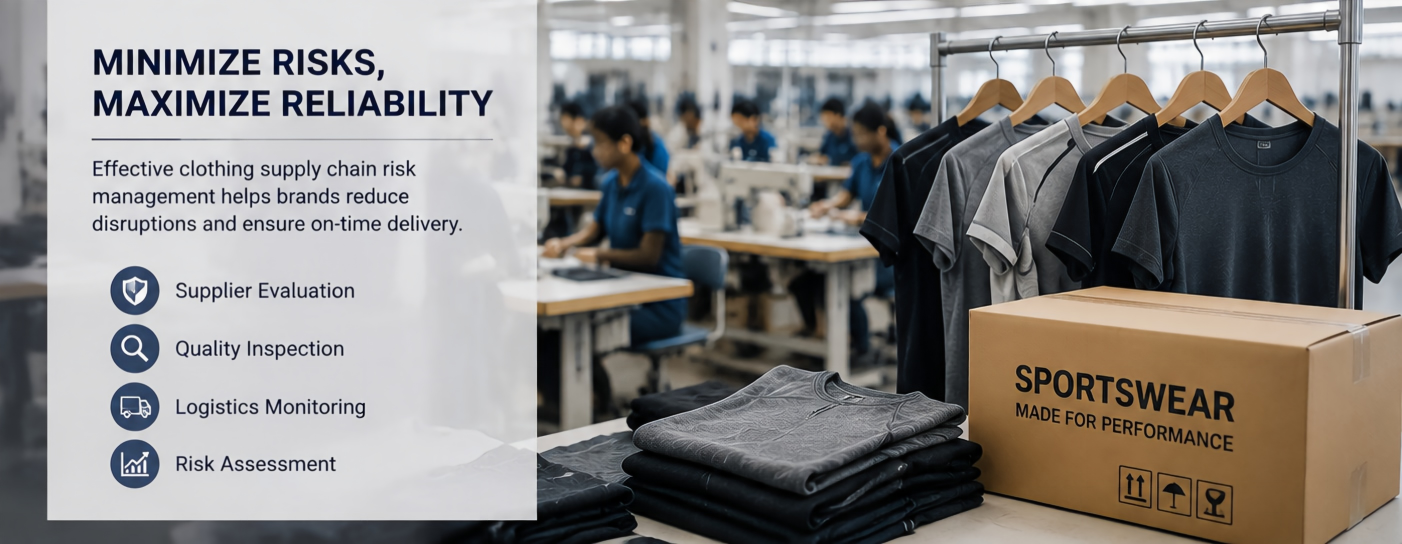
Modern brands need effective clothing supply chain risk management because global manufacturing environments can change quickly.
Possible risks include:
| Risk Type | Possible Impact | Solution |
|---|---|---|
| Material shortage | Production delays | Multiple sourcing options |
| Quality problems | Customer complaints | Strict inspections |
| Shipping delays | Late delivery | Better logistics planning |
| Communication issues | Production mistakes | Clear project management |
Effective clothing supply chain risk management helps brands prepare before problems happen.
How To Build A Reliable Sportswear Supply Chain
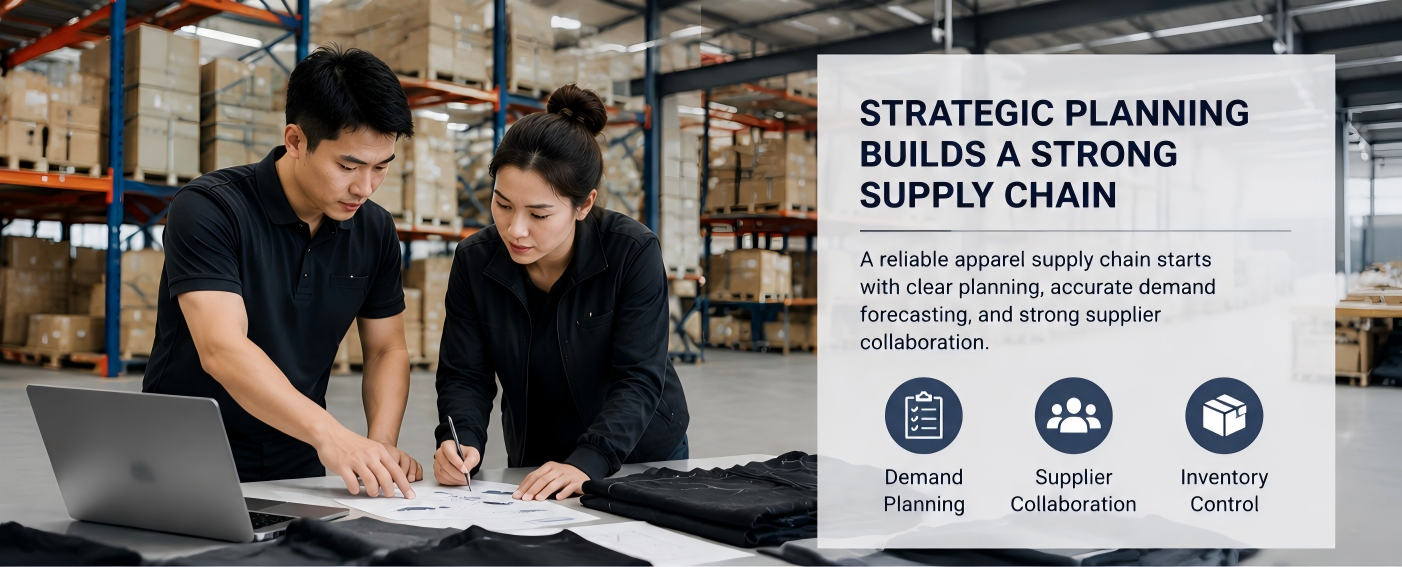
Building a strong supply chain requires strategic planning.
Choose Manufacturers Based On Capability, Not Only Price
The cheapest supplier is not always the best choice.
Professional buyers evaluate:
- Manufacturing experience
- Product knowledge
- Quality systems
- Communication ability
- Production capacity
A reliable partner provides long-term value.
Establish Clear Product Standards
Before production begins, brands should confirm:
- Fabric requirements
- Size specifications
- Color standards
- Packaging details
- Quality expectations
Clear standards reduce misunderstandings.
Maintain Long-Term Supplier Relationships
Changing suppliers frequently increases risks.
Long-term cooperation allows manufacturers to understand:
- Brand requirements
- Customer expectations
- Product standards
Strong relationships improve efficiency over time.
Use Quality Control Throughout Production
Quality inspection should not happen only after production.
A professional process includes:
| Inspection Stage | Purpose |
|---|---|
| Fabric inspection | Check material quality |
| Sample approval | Confirm design accuracy |
| Production monitoring | Prevent problems early |
| Final inspection | Ensure finished quality |
Why Global Brands Choose NOWORNEVER Sport
For international sportswear businesses, choosing the right manufacturing partner is essential.
NOWORNEVER Sport focuses on helping brands create customized sportswear through professional OEM and ODM solutions.
Our manufacturing services include:
- Custom activewear
- Fitness apparel
- Sports uniforms
- Private label clothing
- Fabric sourcing support
- Product customization
We understand that different markets require different solutions.
USA brands often focus on performance, comfort, and fashion trends.
European buyers increasingly value sustainability and premium quality.
Australian sports brands require lightweight and durable products.
Through professional production management, NOWORNEVER Sport helps brands create products suitable for global markets.
Apparel Supply Chain Management Checklist For Buyers
Before choosing a sportswear manufacturer, buyers should evaluate:
| Evaluation Point | Questions |
|---|---|
| Factory experience | Does the supplier understand sportswear production? |
| Material sourcing | Are fabrics stable and reliable? |
| Quality control | Are inspection procedures available? |
| Communication | Can problems be solved quickly? |
| Production capacity | Can the supplier support future growth? |
| MOQ | Does production fit business needs? |
A structured evaluation process reduces sourcing risks.
FAQs
How can sportswear brands improve apparel supply chain management?
Brands can improve apparel supply chain management by selecting reliable manufacturers, maintaining clear communication, controlling quality processes, and building long-term supplier relationships.
What are the biggest risks in a clothing supply chain?
Common clothing supply chain risks include material shortages, production delays, inconsistent quality, communication problems, and logistics challenges.
Why is clothing supply chain risk management important?
Clothing supply chain risk management helps brands identify possible problems before production and create solutions to maintain stable operations.
How do I choose a reliable sportswear manufacturer?
Buyers should evaluate production experience, quality systems, customization capability, communication efficiency, and supplier reliability.
What is the MOQ for custom sportswear?
The minimum order quantity at NOWORNEVER Sport is 150 pieces, suitable for startups, wholesalers, retailers, and global sportswear brands.
Can NOWORNEVER Sport support private label sportswear?
Yes. NOWORNEVER Sport provides OEM and ODM services including custom designs, fabrics, labels, packaging, and production support.
Conclusion: Building A Strong Supply Chain Creates Long-Term Competitive Advantage
A successful sportswear brand requires more than attractive designs.
It requires a reliable manufacturing foundation.
Professional apparel supply chain management helps brands maintain quality, improve efficiency, and reduce operational risks.
A strong clothing supply chain allows businesses to respond faster to market changes.
Effective clothing supply chain risk management protects brands from unexpected problems.
By choosing an experienced manufacturing partner like NOWORNEVER Sport, global brands can build a more stable production system with flexible customization options and a minimum order quantity of 150 pieces.
Build Your Reliable Sportswear Supply Chain With NOWORNEVER Sport
Partner with NOWORNEVER Sport to develop high-quality custom sportswear through professional OEM and ODM manufacturing, reliable supply chain management, and flexible production solutions designed for global brands.
https://www.noworneversports.com/contact-us.htm